


Mô tả
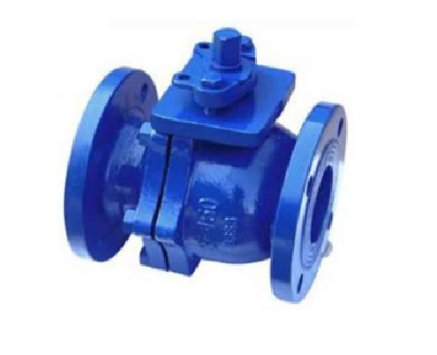
A ball valve is a type of value used to open or close the flow using a spherical ball with a through hole. When the handle is rotated 90°, the hole in the ball aligns with the flow direction →open, and when rotated back → close.
A ball value provides excellent sealing performance and smooth operation, making it suitable for water, gas, oil, chemicals, and compressed air applications.
Construction:
– Valve body: stainless steel, brass, carbon steel, or PVC, depending on the fluid type and pressure requirements.
– Ball: A hollow metal sphere with a through-hole. This is the main flow control component.
– Sealing gasket: PTFE (Teflon), RPTFE, ensuring a tight seal when the valve is closed.
– Stem: Stainless steel 304/316, connecting the handle/actuator to the ball to enable a 90° rotation.
– Handle, handwheel
– Stem O-ring
– Body bolts & nuts (for 2-piece / 3-piece designs)
Technical specifications:
– Size: DN18 – DN300 (threaded up to DN100, flanged up to DN300)
– Pressure rating: PN16 – PN40 / Class 150–300
– Temperature range: –10°C to 180°C
– Body materials: SS304/316, brass, carbon steel, PVC
– Ball material: SS304/316, chrome-plated
– Seat materials: PTFE, RPTFE, EPDM, Viton
– Connection type: Threaded (BSPT / BSP / NPT), flanged PN16
– Actuation: Lever, gear operator, electric actuator, pneumatic actuator
– Media: Water, compressed air, light steam, oil, gas, chemicals
Key Characteristics:
– Quick open/close with a 1/4 turn (90°).
– Extremely tight shut-off (zero leakage)
– Low operating torque due to minimal friction
– Long service life with minimal maintenance
– Higher pressure capability compared to butterfly valves
– Ideal for small to medium pipeline systems
Benefits:
– Extremely fast operation: Only a 1/4 turn (90°) is needed to switch the valve from fully open to fully closed.
– High durability & tight sealing: PTFE seals ensure no leakage even after many operating cycles.
– Low pressure loss: The "full bore" design (ball bore equal to the pipe's inner diameter) allows fluid to pass through the valve with minimal flow resistance.
– Easy automation: Can be easily with electric or pneumatic actuators for integration into SCADA/PLC systems.
– Low pressure loss: The "full bore" design (ball bore equal to the pipe's inner diameter) allows fluid to pass through the valve with minimal flow resistance.
– Smooth and light operation
– Suitable for high-pressure applications
Disadvantages:
– Not recommended for large pipelines (DN250+ butterfly valves are preferred)
– Higher cost compared to butterfly or gate valves of the same size
– Flow regulation is not as smooth as a globe valve
Applications:
– Shut-off valve: Installed before/after pumps or air release and pressure reducing valve assemblies to facilitate maintenance and equipment replacement without the need to drain the pipeline.
– Flow regulation: Although not designed for precise continuous flow regulation (like a globe valve), ball valves are still used for quick flow adjustment in secondary branches.
– Main pipeline systems: Large size flanged ball valves are used to control flow in transmission pipelines.



Đánh giá
Chưa có đánh giá nào.