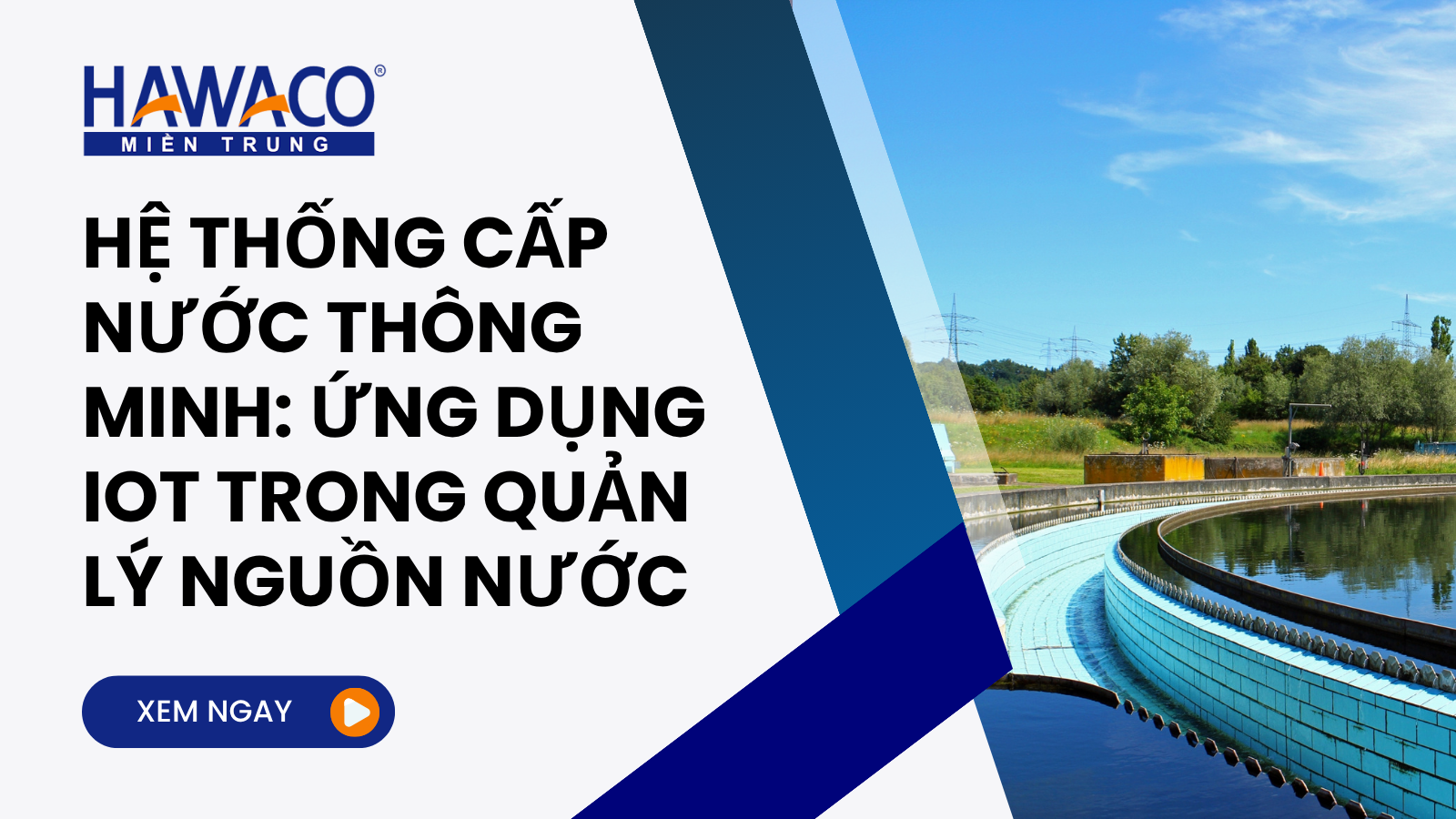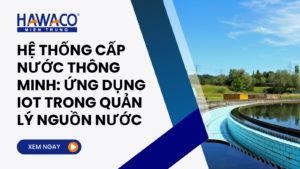
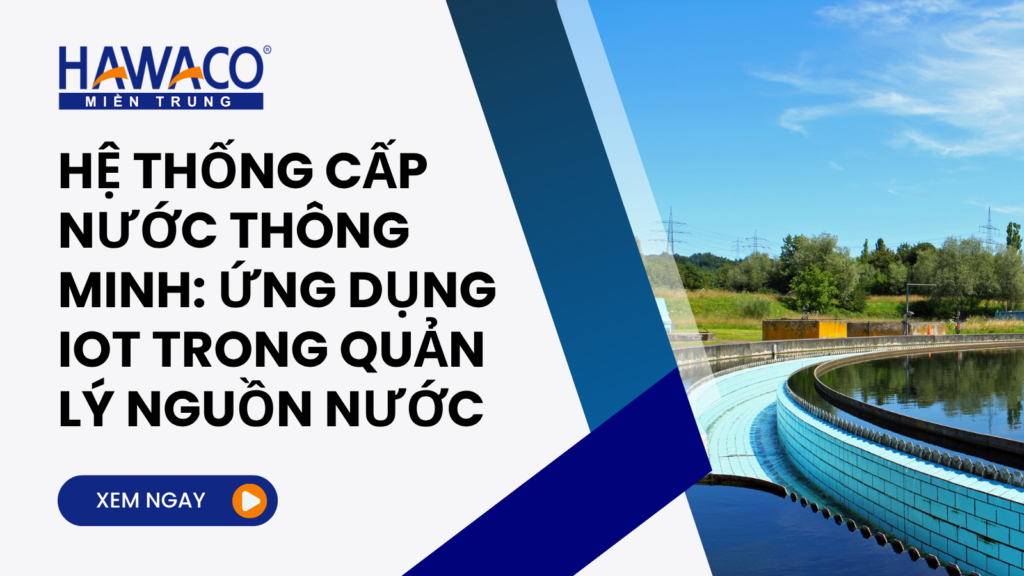
As clean water resources become increasingly scare and demand continues to rise, water supply companies are compelled to seek new solutions to manage resources efficiently, reduce water loss, and improve service quality. One of the technological trends being strongly implemented today it the application of IoT (Internet of Things) to build a system a smart water supply.
What is IoT in the water supply industry?
IoT là mạng lưới các thiết bị được kết nối Internet, có khả năng tự động hóa, thu thập và truyền dữ liệu theo thời gian thực. Trong ngành cấp nước, các thiết bị như đồng hồ nước thông minh, cảm biến áp suất, cảm biến lưu lượng, van điều khiển, bộ truyền tín hiệu… được tích hợp với phần mềm điều hành trung tâm để giám sát và điều khiển toàn bộ hệ thống phân phối nước.
Cấu trúc hệ thống cấp nước thông minh:
– Lớp thiết bị hiện trường:
+ Cảm biến lưu lượng, áp lực, mức nước
+ Van điều khiển thông minh
+ Đồng hồ nước AMR/AMI
– Lớp truyền thông:
+ 4G/5G, LoraWan, NB – IoT
– Lớp nền tảng & phân tích
+ Phần mềm Scada
+ Nền tảng phân tích dữ liệu & AI
Key benefits of smart water supply systems
-
Reducing water loss
Water loss caused by leaks, pipe corrosion, meter inaccuracies, and other issues remains a persistent challenge in many localities. IoT systems help detect abnormalities in flow and pressure, and accurately pinpoint the location of leaks. -
Operational Optimization
Real - time data enables water utilities to adjust pressure and flow according to actual demand, preventing overload or excess supply. In addition, the system allows for remote control, helping to reduce manpower requirements. -
Instant fault alerrts
When incidents such as pipe bursts, empty storage tanks, or water source contamination occur, the system automatically sends alert signals to the control center for timely response and handling. -
Enhancing user experience
Người dân có thể theo dõi lượng nước tiêu thụ, hóa đơn, lịch sử sử dụng và nhận thông báo bảo trì qua ứng dụng điện thoại hoặc email
Lơi ích khi triển khai:
- Giảm thất thoát nước 15-30%
- Tiết kiệm năng lượng vận hành
- Bảo trì dự đoán
- Quyết định dựa trên dữ liệu
Practical Applications in Vietnam
-
In Hanoi, Hanoi water limited company (Hawaco) has implemented smart water meters in many inner - city districts.
-
In Ho Chi Minh City, several new urban areas use water supply management systems using pressure sensors and monitoring software based on the SCADA model
-
Industrial parks in Binh Duong and Dong Nai have also adopted automated pumping stations controlled via IoT helping to reduce operating costs.
Công nghệ & nhà cung cấp phổ biến
- Xylem – nền tảng phân tích & thiết bị đo
- Sensus – đồng hồ nước thông minh
- ABB – tự động hóa & SCADA
- Schneider Electric – quản lý năng lượng & điều khiển
Implementation Challenges
-
High Initial Investment Costs for hardware and network infrastructure
-
Yêu cầu cao về bảo mật dữ liệu & an ninh mạng, to prevent interference or connection loss.
-
The need to retrain the workforce, especially operating engineers and technicians.
- Yêu cầu hạ tầng viễn thông ổn định, cần chuẩn hóa dữ liệu hệ thống cũ.
Xu hướng tương lai
- Digital Twin cho mạng cấp nước
- AI dự báo nhu cầu tiêu thụ
- Tích hợp quản lý năng lượng & carbon
- Tự động hóa hoàn toàn trạm bơm
Conclusion
The application of IoT in water supply systems is inevitable trend in the digital transformation of urban infrastructure. With synchronization from hardware to software, smart water supply systems will enhance management efficiency, conserve resources, and meet the increasingly high expectations of the community.